

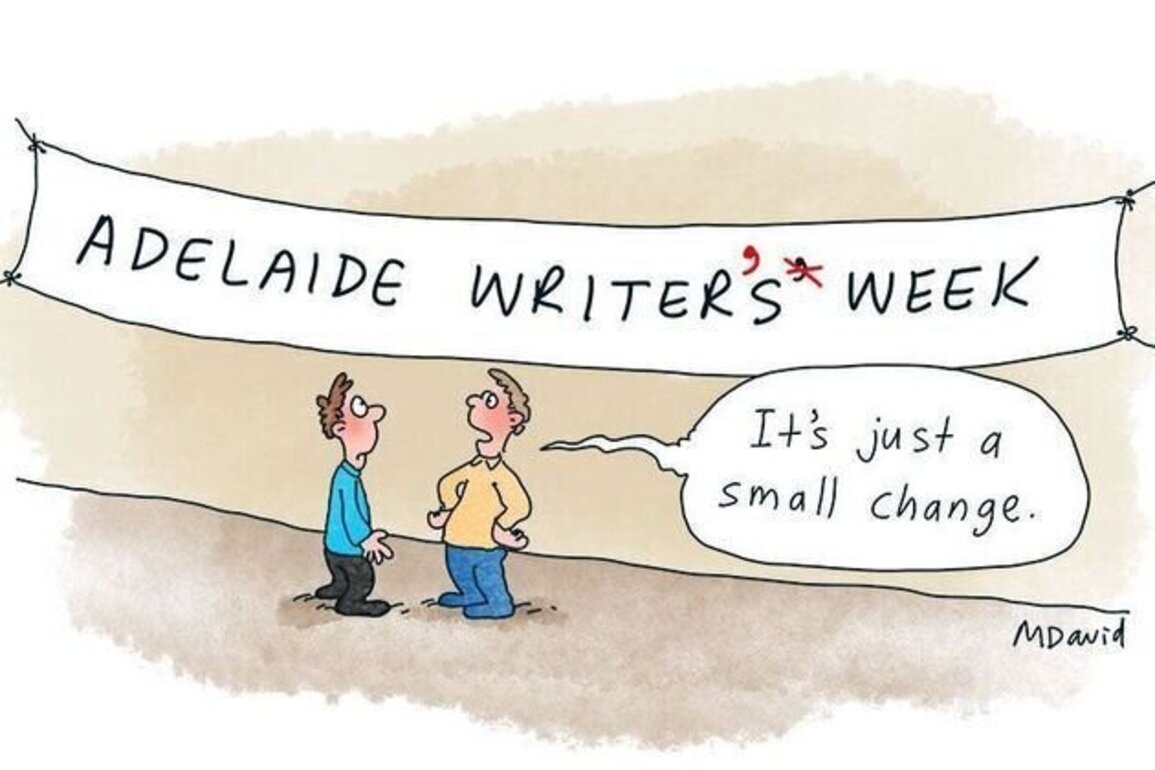
A once world-leading literary festival has been reduced to rubble by political interference, parochial thinking and a Premier who mistook personal conscience for public duty, writes DrMichael Galvin.
THERE WAS A TIME in the 1970s when South Australia was well known for two things: itsArts Festival/Writers' Week and the states Premier,Don Dunstan, a flamboyant champion of the arts in all its forms, including Writers' Week.
University postgrads would save their pennies every two years from around Australia to travel to what used to be referred to, without irony, as the Athens of the South. To see performances by the likes ofPeter Brook,Philip Glass,Michael Nymanand many others. And go to Writers' Week.
Adelaide was justifiably seen as the Australian leader for an internationally significant Arts Festival and Writers' Week. In the Australian national context, it was the undisputed leader, not a follower.Margaret Atwoodgoes even further,sayingAdelaide led the way, not just in Australia, but around the world.
Now, of course, every regional town and village trying to attract the tourist dollar has a writers' festival of some kind, and most capital cities have followed Adelaides lead and set up their own annual arts festivals. Where Adelaide led, the rest of Australia has followed.
Festival of cowardice: The cancellation of Randa Abdel-FattahIf the decision to remove a Palestinian author from Adelaide Writers' Week was intended to reflect intellectual awareness, it failed.
By the time this writer moved to Adelaide in 1990, Adelaide Writers' Week could still claim to be the literary event of the year in Australia, for writers and readers. And until a week or so ago, it probably still was.
While a major factor was no doubt the calibre of the authors willing to travel to Adelaide to speak at Writers' Week, its success also had something to do with overall ambience: the ease of mingling with famous writers from around the world, an urbane city with a liberal political class and a reputation for tolerance, balmy Mediterranean weather, a fabulous parkland setting close to the CBD.
Adelaide Writers' Week had it all, including a leader inLouise Adler, who had, in recent years, ensured that Writers' Week had stayed on top of the game.
Now, of course, Writers' Week 2026 is nothing more than a cesspit of nothingness, its reputation in tatters, a focus of recriminations and general nastiness, cowardly behaviour by people who should have known better, and a Premier of the State who appears so knuckleheaded in his own crusade forsocial cohesionandcultural sensitivity(sic!) that he is oblivious of the extent to which his own reputation has been trashed in just a few days.
PremierPeter Malinauskashas proved the arts communitys suspicions right: that he cares (and probably knows) far more about golf, racing cars and football than he does about the arts.
In South Australia, you learn to live with a certain degree of cognitive dissonance. On the one hand, anything that seems world-class is celebrated mightily, but a touch too defensively. (Look at what we in little old Adelaide have achieved. Arent we brilliant, no matter what you people in Sydney or Melbourne might think?)
On the other hand, a feeling of being small and away from the national or international spotlight produces a kind of lobotomised effect: nothing that happens here will be noticed by or matter much to the wider world, so it doesnt really matter what happens here. Do what you like. No one else will care. Local is the name of the game.
This tension results in an Adelaide that simultaneously acts as if it is just a smaller version of a city like Sydney or Melbourne, but also as if it is just another parochial country town, just a bit bigger.
The Writers' Week debacle certainly shows clearly that the latter is more true than the former. After the collapse of theBendigo Writers' Festivallast year, it is inexplicable that the Festival Board and the Premier did not see what would be the result of their actions and decisions. The local powers that be behaved as if they were not going to be noticed by anyone, as if it were just their own little event in their own little city.
Adelaide Festival drops Randa Abdel-Fattah after Bondi attacksAdelaide Festival has cancelled Randa Abdel-Fattahs Writers Week appearance, citing cultural sensitivity after the Bondi terrorist attacks.
For example, when the exodus of writers soon after the crisis erupted gained momentum,Norman Schueler, representing theJewish Community Council of South Australia, said he was very, very surprised by the boycott. Not just surprised, not very surprised, but very, very surprised.
One wonders what circles (or echo chamber?) Schueler must move in to be surprised at all, after Bendigo six months earlier. But his reaction, and the Festival Boards initialanonymous statementso many fatty words, so little actual meat kind of proves the point about local parochialism.
As a related matter of interest, the number of Jews living in South Australia was 1,145, according to anSA Government website.
Not all of them are Zionist, so the community Schueler is boldly speaking for is small indeed. Yet he obviously has the ear of the Premier. Hestold us so.
It would appear that the Premier seems to live in a similar parochial echo chamber, judging by the 2 Januaryletter he wroteto the Festival Board and handed on 11 January to the Murdoch media, whose relentless, histrionic support for the actions of Israel seems to have no bounds.
In the Premiers letter, the only principle that seems to matter is what his own individual conscience is telling him is right. No mention of Bendigo, no awareness that it was likely to happen in Adelaide, too. No awareness that what he wanted would likely lead to the collapse of Writers Week. No awareness that he might have got his facts wrong about what happened withThomas Friedmanin a previous Writers Week.
Not only is there a letter on the record from the previous Chair of the Board refuting the claim that Friedman was uninvited, but Malinauskas is so censorship-oriented that he actually commends the Board for this separate act of egregious censorship, if indeed it did occur.
'Wrong risks, no moral courage': La Trobe and the Bendigo Writers FestivalClare Wright says La Trobe lacked moral courage in the Bendigo Writers Festival collapse and still hasnt apologised for its actions.
Winners and losers
There are no clear winners from this sorry story. But there are a lot of losers.
The biggest loser of all is the Premier. Peter Malinauskas will never again stride down North Terrace, past most of Adelaides universities and arts institutions, like a Colossus. His reputation for being a man of proud virtue, always capable of knowing what is best for his state, is finished. Writers' Week was destroyed on his watch.
The Premier's Labor MPs have also been damaged. What have we heard from any of them about this crisis? Crickets. Are we to believe that all these MPs really think Malinauskas much-cited conscience (especially regarding himself) is a truer guide to moral and political reality than the 180 or so writers from around the world who withdrew from the event over a matter of conscience?
Books and readers are also obvious losers, as are those whose income depends on events like this writers, publishers, the hospitality industry and the staff that make Writers' Week the unique event it was. (Malinauskas, in one of his uncomfortable interviews in the days following the removal ofRanda Abdel-Fattah, asserted that there is no loss of income to the state, because it is largely a free festival event. How little the downstream effects on the livelihoods of the many people losing income seem to occur to him.)
The Zionist cause is also a loser. These people may have won the battle of getting a Palestinian Australian writer removed from the program, but at the price of many more people asking questions about the insidious lobbying that went on behind the scenes. Playing any role in the destruction of the most important literary event in Australia is not going to help their cause.
Questions will be asked, not only about how and what lobby groups played a role in this decision. But about the role of behind-the-scenes lobby groups in Australia more generally. (The Zionist lobby is a case in point when it comes to anything to do with the actions of the State of Israel regarding Palestinians since 7 October.)
And nor is the Zionist cause helped by renewed focus on the politics of the Gaza genocide a term used here as it is in theUnited Nations reportinto the matter.
Dr Randa Abdel-Fattahs appearance may have been cancelled. Yetopinion pollsshow a majority of Australians believe Israels war in Gaza to be terribly wrong.
La Trobe Vice Chancellor invokes Bondi killings to defend festival censorshipThe Vice Chancellor of La Trobe University used the Bondi attack to absolve himself over the attempted censorship of writers due to speak at Bendigo Writers Festival back in August.
Winners
Abdel-Fattah, in addition to selling more books than she probably ever dreamed of, has been afront-page storyfor over a week.The decision to uninvite her has led directly to more promulgation of her views, past and present, than she could ever achieve from a hundred Writers' Weeks.
And the sky hasnt fallen in, despite Malinauskas dire warnings in his 2 January letter that Abdel-Fattahs ideas, if spoken out loud at the Festival, would lead to the collapse of social cohesion and great harm.
What next?
Firstly, it is hoped that the defamation trial involving the Premier goes ahead. Just as theBruce Lehrmanndefamation trial brought much-needed clarity to murky, distasteful and ultimately criminal words and actions, the same clarification process could happen here. What does cultural safety mean? What is the proper exercise of a Premiers authority? When is a line crossed when a Premier decides to go after someone? What does the Premier mean by hateful? And so on.
Secondly, it is hoped that Albaneses ersatzRoyal Commissioninto hate speech, anti-semitism and associated matters will investigate this whole inglorious matter.
It is impossible to believe thatthese wordsof Peter Malinauskas are the last we are going to hear about them:
DrMichael Galvinis an adjunct fellow at Victoria University and a former media and communications academic at theUniversity of South Australia.
Related Articles
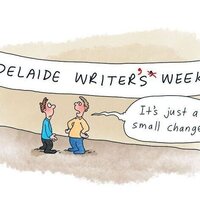
- CARTOONS: Adelaide Writers' 'Weak' decision not a best seller
- Festival of cowardice: The cancellation of Randa Abdel-Fattah